The number on the tag is the one figure in the transaction that everyone agrees on, which is exactly why it deserves the least of your attention. What decides whether an electric bicycle is cheap or expensive to own is a series of smaller payments spread over five or eight years, most of them arriving without warning, several of them controlled entirely by the manufacturer. A careful reader checks those before the deposit, not after. The questions are simple, they take a phone call or a look at a parts catalog, and the answers vary enormously between bikes that look identical on a showroom floor.
1. What a replacement battery costs, and whether anyone still makes it
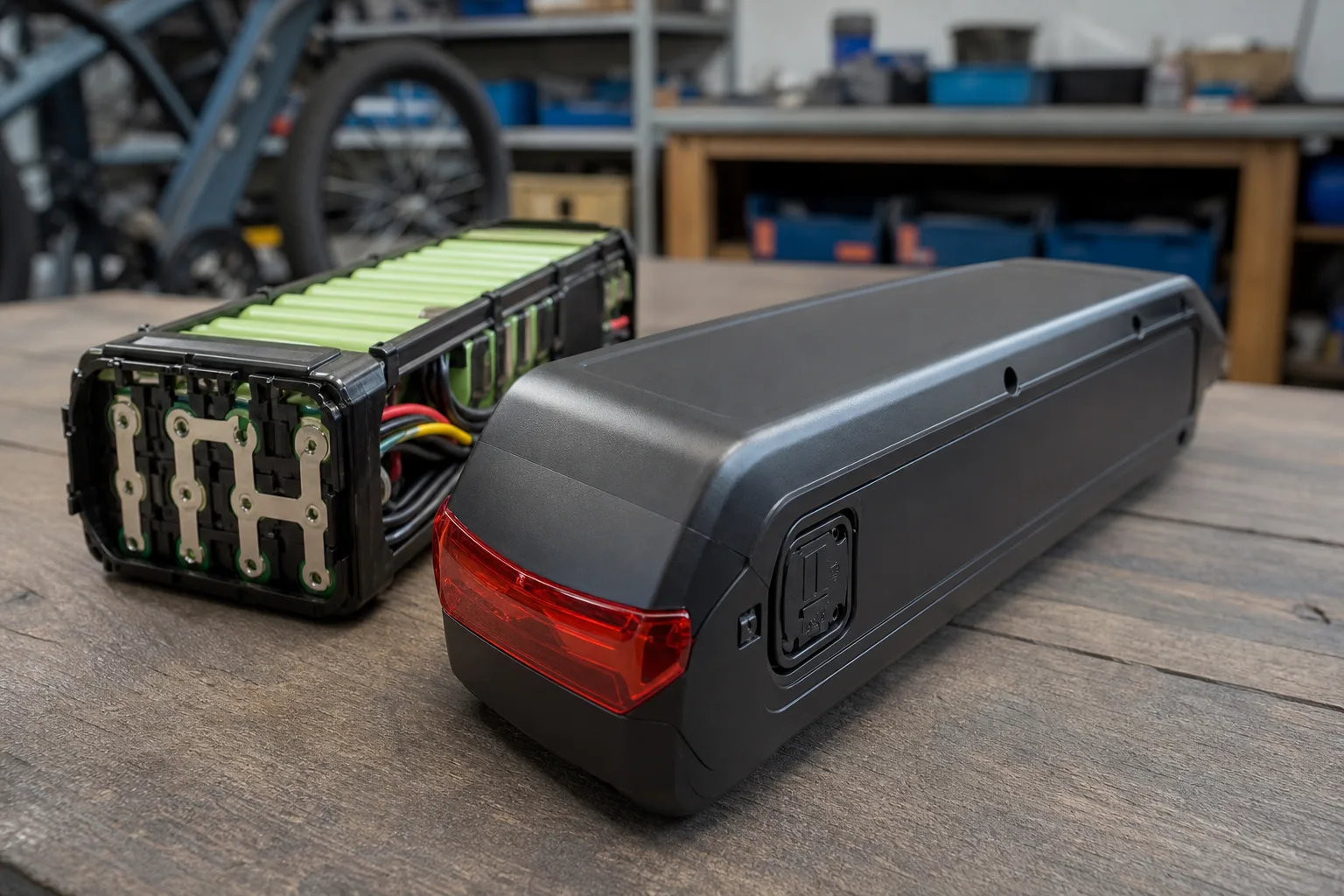
A battery pack is a consumable with a slow fuse. It fades gradually, then noticeably, and somewhere in the third to sixth year most riders start planning a replacement rather than a repair. The cost is usually the single largest line item in ownership, often a meaningful fraction of what the bike cost new. What matters more is availability: a pack shaped to fit one downtube, with one connector and one communication protocol, exists only as long as the brand chooses to make it. Ask what a pack costs today, ask how long past packs stayed in the catalog, and ask whether the cells sit in a housing anyone else can source.
2. Whether the motor can be serviced by someone other than the maker
Mid-drive units from the large motor suppliers are largely sealed assemblies, diagnosed with proprietary software and swapped rather than opened. That is not automatically bad, since a swap under warranty is fast and the diagnostic tools are widely distributed among trained shops. The question a careful buyer asks is how far away the nearest shop with the software and the account actually is, because a motor fault on a system nobody local can read turns into a shipping problem. Hub motors are often the opposite case: simpler, more generic, more likely to be repaired by a competent local mechanic with common parts.
3. How fast the consumables go, given the weight
An electric bicycle weighs substantially more than the equivalent unpowered bike, carries more cargo, and travels at its assisted speed for a far greater share of the ride. Brake pads and rotors absorb that energy every time you slow down, and tires carry it constantly. Expect pad life measured in months rather than seasons on a commuting bike, expect chains and cassettes to stretch faster under motor torque, and budget for tires built for the load rather than the lightest rubber that fits. None of this is expensive per event. It is the frequency that changes the arithmetic, and it is worth pricing the specific pads and tires your bike takes.
4. Insurance and secure storage, which are one problem in two invoices
A homeowners or renters policy may cover a bicycle, usually within a personal property limit and often subject to a deductible that swallows most of a claim on a mid-priced bike. Specialist bicycle policies exist and are worth a quote, particularly if the bike lives in a shared hallway or is left locked in public during the workday. Storage is the other half: a heavy bike needs a ground-floor space, a solid anchor, and a lock rated for the value, and if your building offers none of those, the cost of creating them belongs in the purchase decision rather than after it.
5. What happens when the model is discontinued
Brands stop supporting products, and electric bicycles carry more single-source parts than any other bike: the display, the controller, the wiring harness, the battery mount, sometimes a proprietary rear rack or fender. When a model goes, those parts go with it eventually, and the useful life of the bike becomes the life of whichever component fails first. The safe check is to look for standard interfaces, a battery family that spans several models, and a company with a service history longer than one product cycle. The Consumer Product Safety Commission oversees safety requirements for e-bike batteries and chargers sold in the United States, which is one more reason to favor systems with documented certification and a supply chain that is still answering the phone.
All five checks can be made before you buy, in an afternoon, with questions a good shop will answer directly. Bikes that survive that afternoon tend to be the ones people are still riding a decade in.